
Good Agricultural Practices in harvesting
Good Agricultural Practices in harvesting emphasize hygiene, careful handling, and proper storage to reduce contamination risks. Training workers, monitoring conditions, and following safety standards ensure food quality, consumer protection, and sustainable agricultural production.
Jun Hao Bai
6/7/20256 min read


This article has been prepared using generative AI, DeepSeek V-3 and Perplexity.ai, with the oversight of Bai Jun Hao (Dr Philip Button). The prompts used are below:
DeepSeek prompt
Detail several examples in a blog article of 2 000 words of good agricultural practice in harvesting that will improve the safety and quality of food. Separate these examples into those practices involved with manually harvesting and mechanical harvesting. Give some examples in particular countries too.
Perplexity prompt
List several examples of foodborne disease outbreaks that are the result of poor agricultural practice. Provide the reference for each one along with a summary and overview of important details of the outbreak.
Harvesting is a critical stage in the agricultural supply chain, where the quality and safety of food are directly influenced by the methods employed. Good Agricultural Practices (GAP) in harvesting are essential to ensure that food reaches consumers in the best possible condition, free from contamination and with optimal nutritional value. This blog article explores several examples of GAP in harvesting, divided into manual and mechanical harvesting methods, and highlights specific practices in different countries.
<!-- wp:image {"id":6135,"sizeSlug":"large","linkDestination":"none","align":"center"} -->
<figure class="wp-block-image aligncenter size-large"><img src="https://foodmicrobiology.academy/wp-content/uploads/2025/03/0C810EA9-A943-42F2-99E1-678F491D666B-1024x585.webp" alt="" class="wp-image-6135"/><figcaption class="wp-element-caption"><strong>AI generated image on ChatGPT</strong>. Prompt used: Create an image that combine manual agricultural harvesting and mechanical agricultural harvesting.</figcaption></figure>
<!-- /wp:image -->
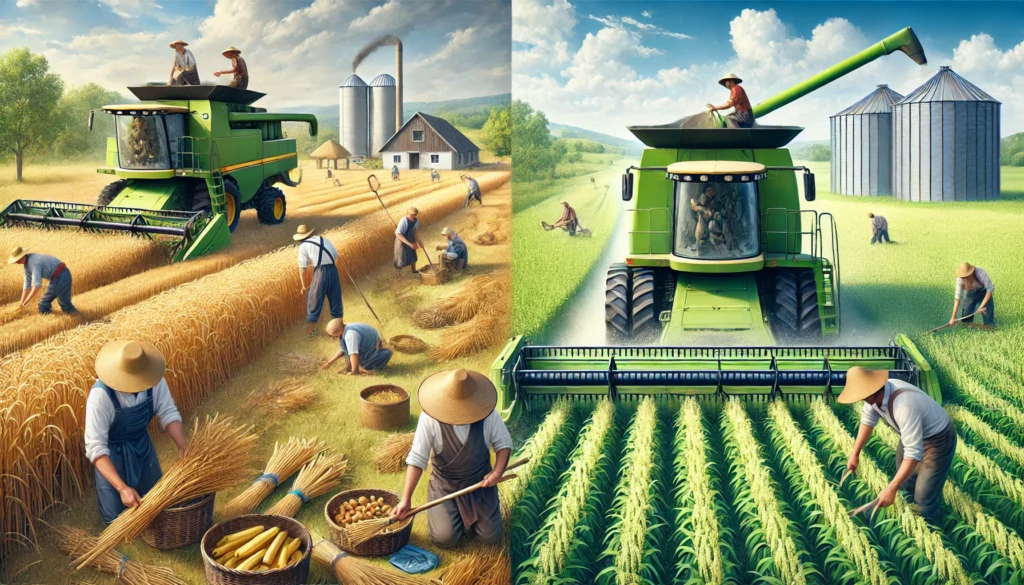
AI generated image on ChatGPT. Prompt used: Create an image that combine manual agricultural harvesting and mechanical agricultural harvesting.
Manual harvesting practices
Manual harvesting involves the use of human labour to pick, cut, or gather crops. This method is often preferred for delicate fruits and vegetables that require careful handling to avoid damage. Below are several examples of good agricultural practices in manual harvesting:
1. Proper training of harvest workers
Example: Strawberry harvesting in Spain
In Spain, strawberry farms in the Huelva region are known for their high-quality produce. Workers are trained to handle strawberries gently to prevent bruising, which can lead to spoilage. They are also educated on the importance of personal hygiene, such as washing hands and using clean gloves, to minimize the risk of contamination.
2.Use of clean and sanitised tools
Example: Coffee harvesting in Colombia
In Colombia, coffee pickers are provided with clean and sanitised tools to ensure that the beans are not contaminated during harvesting. Workers are trained to use sharp, clean knives to cut the coffee cherries from the branches, reducing the risk of introducing pathogens that could affect the safety of the coffee and spoilage organisms that could affect the quality of the coffee.
3. Proper handling and storage
Example: Mango harvesting in India
In India, mangoes are often harvested manually to avoid damage to the fruit. Workers are trained to handle the fruit carefully, using padded baskets to prevent bruising. After harvesting, the mangoes are stored in a cool, shaded area to reduce the risk of spoilage and maintain their quality until they are transported to market.
4. Use of protective clothing
Example: Grape harvesting in France
In France, grape pickers in the Bordeaux region are required to wear protective clothing, including gloves and hairnets, to prevent contamination of the grapes. This practice is particularly important in the production of high-quality wines, where even minor contamination can affect the flavor and safety of the final product.
Mechanical harvesting practices
Mechanical harvesting involves the use of machinery to gather crops. This method is often used for large-scale operations where efficiency is critical. However, it requires careful management to ensure that the quality and safety of the food are not compromised. Below are several examples of good agricultural practices in mechanical harvesting:
1. Regular maintenance and cleaning of equipment
Example: Wheat harvesting in the United States
In the United States, wheat farmers regularly maintain and clean their combine harvesters to ensure that the machinery operates efficiently and does not introduce contaminants into the grain. Regular maintenance also helps prevent mechanical failures that could lead to crop damage or loss.
2. Calibration of harvesting equipment
Example: Potato Harvesting in the Netherlands
In the Netherlands, potato harvesters are carefully calibrated to ensure that the potatoes are harvested at the right depth and speed. This practice helps minimise damage to the potatoes, which can lead to spoilage during storage. Proper calibration also ensures that the potatoes are harvested at the optimal stage of maturity, enhancing their quality.
3. Use of sensors and automation
Example: Apple harvesting in New Zealand
In New Zealand, apple orchards are increasingly using automated harvesters equipped with sensors to detect the ripeness of the fruit. These machines are programmed to harvest only the ripe apples, reducing the risk of damage to the fruit and ensuring a consistent quality. The use of automation also reduces the need for manual labour, which can be a source of contamination.
4. Proper handling and storage post-harvest
Example: Corn harvesting in Brazil
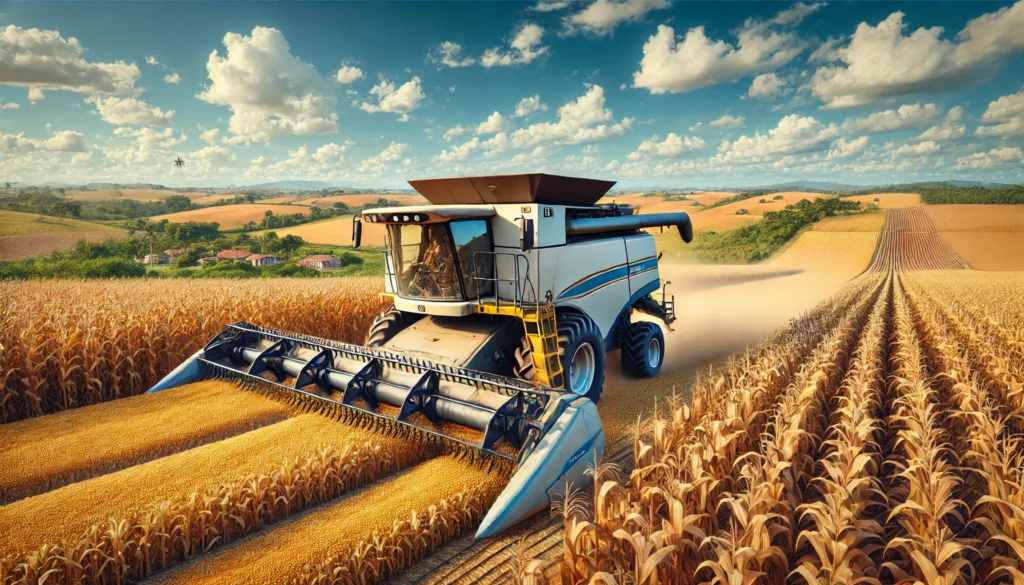
In Brazil, corn is often harvested mechanically using combine harvesters. After harvesting, the corn is immediately transported to storage facilities equipped with temperature and humidity controls. This practice helps prevent the growth of mould and other contaminants, ensuring that the corn remains safe and of high quality until it is processed or sold.
AI generated image using ChatGPT. Prompt used: Create an image of a combine harvester in a cornfield in Brazil.
<!-- wp:image {"id":6136,"sizeSlug":"large","linkDestination":"none","align":"center"} -->
<figure class="wp-block-image aligncenter size-large"><img src="https://foodmicrobiology.academy/wp-content/uploads/2025/03/A3315707-26F6-46EE-8ED8-06637092EF1B-1024x585.webp" alt="" class="wp-image-6136"/><figcaption class="wp-element-caption"><strong>AI generated image using ChatGPT.</strong> Prompt used: Create an image of a combine harvester in a cornfield in Brazil.</figcaption></figure>
<!-- /wp:image -->
5. Use of GPS and precision agriculture
Example: Soybean harvesting in Argentina
In Argentina, soybean farmers use GPS technology and precision agriculture techniques to optimise the harvesting process. GPS-guided harvesters ensure that the soybeans are harvested at the right time and in the right conditions, reducing the risk of crop damage and improving the overall quality of the harvest. Precision agriculture also helps farmers monitor the condition of their crops in real-time, allowing them to make informed decisions about when and how to harvest.
Several foodborne disease outbreaks resulting from poor agricultural practices have been documented. Here are some notable examples:
E. coli O157:H7 outbreak in California spinach (2006):
This outbreak affected 205 people and caused 3 deaths2. The contamination was traced to bagged fresh spinach from California. Poor agricultural practices likely contributed, including potential contamination from upstream cattle, feral pigs, and irrigation water. The washing and disinfection processes for the spinach were insufficient to prevent E. coli O157:H7 from entering the bags2.Listeria outbreak in Colorado cantaloupes (2011):
This outbreak resulted in 30 deaths2. A congressional investigation revealed several poor agricultural and processing practices:
Condensation from cooling systems drained directly onto the floor
Poor drainage led to water pooling around food processing equipment
Inappropriate food processing equipment that was difficult to clean
No antimicrobial solution was used to wash the cantaloupes
Lack of proper cooling procedures for the cantaloupes before cold storage2
Salmonella Oranienburg outbreak in alfalfa sprouts:
This outbreak affected 133 people, with 32 hospitalisations3. While specific agricultural practices were not detailed, sprout production is known to be susceptible to bacterial contamination if proper hygiene and safety measures are not followed.Yersinia pseudotuberculosis outbreaks in Finland:
Four outbreaks were reported, all restricted to Finland3. Although specific details were not provided, these outbreaks highlight the potential for regional agricultural practices to contribute to foodborne illnesses.Multiple produce-associated outbreaks:
Several outbreaks were linked to poor agricultural practices, including:
Use of poor quality water in post-harvest processing (e.g., washing)
Use of contaminated water pre-harvest for irrigation or spraying (e.g., rockmelons, tomatoes)
Wildlife incursions into growing areas, causing direct contamination in storage or fields
Contaminated water sources3
These examples demonstrate that poor agricultural practices, including inadequate water quality management, insufficient pest control, and improper handling and processing procedures, can significantly contribute to foodborne disease outbreaks. Implementing proper food safety measures throughout the agricultural production chain is crucial for preventing such incidents.
Conclusion
Good Agricultural Practices in harvesting, whether manual or mechanical, are essential for ensuring the safety and quality of food. By implementing these practices, farmers can reduce the risk of contamination, minimise crop damage, and ensure that their produce reaches consumers in the best possible condition. The examples provided from different countries highlight the importance of proper training, the use of clean and well-maintained equipment, timely harvesting, and proper handling and storage. As the global demand for safe and high-quality food continues to grow, the adoption of these practices will become increasingly important for farmers around the world.
By focusing on these good agricultural practices, farmers can not only improve the safety and quality of their produce but also enhance their reputation and competitiveness in the global market. Whether through manual or mechanical harvesting, the goal remains the same: to deliver safe, high-quality food to consumers while minimising environmental impact and ensuring the sustainability of agricultural practices.