
Science and Technology in the Food Sector: Punctuation Marks in the Journey
The article “Science and Technology in the Food Sector: Punctuation Marks in the Journey” highlights how innovations in science and technology shape food production. It emphasizes sustainability, safety, efficiency, and global collaboration driving sector transformation..
Jun Hao Bai
9/22/20258 min read


<!-- wp:image {"id":8093,"sizeSlug":"full","linkDestination":"none"} -->
<figure class="wp-block-image size-full"><img src="https://foodmicrobiology.academy/wp-content/uploads/sci-and-techs.jpg" alt="" class="wp-image-8093"/></figure>

<!-- /wp:image -->
Future of Science and Technology. [Photograph]. Center for Education in Science and Technology. https://www.cest.org.uk/future-of-science-and-technology/
People usually think of science and technology in terms of medicine, robotics, or artificial intelligence. These fields often dominate the headlines because of their groundbreaking advancements and transformative impact on human life.
However, science and technology are not confined to laboratories, hospitals, or machines. Research and development also shine through in the food sector, especially that technology is rapidly advancing. While often overlooked, food science plays an important role in ensuring that the most basic human need—food—is safe, nutritious, and sustainable.
In an age where global populations are rising, dietary preferences are rapidly shifting, and environmental concerns are pressing, the role of food science is more important than ever. It ensures that food safety and quality guidelines are adhered to while also working to develop systems sufficient to meet the world’s growing needs.
Food science is a multidisciplinary field of study that involves the application of chemistry, nutrition, microbiology, chemical engineering, and physics to food and food systems. It has five major disciplines: sensory science, nutrition, food chemistry, microbiology, and engineering and processing. Together, these disciplines aim towards creating new food, improving food systems, and making our life easy.
Comma: Dr. Peña, Always Leading to More
In the Philippines, the Bachelor of Science in Food Technology (BS Food Technology) program offers students the opportunity to specialize in this vital field. Students learn how to analyze food composition, ensure compliance with safety standards, and develop sustainable solutions to address food security challenges. Graduates of BS Food Technology pursue diverse careers, from working as food technologists, product developers, and quality assurance officers to becoming researchers in food manufacturing companies, government agencies, and academic institutions.
Among its distinguished graduates is Dr. Carlos Antonio Manalansang Peña, now a Science Research Specialist II at the Department of Science and Technology–National Capital Region (DOST–NCR). His work focuses on food safety, from conducting assessments and identifying the needs of food MSMEs to leading training programs and presentations that promote safe and innovative practices in the sector.
<!-- wp:image {"id":8094,"sizeSlug":"large","linkDestination":"none"} -->
<figure class="wp-block-image size-large"><img src="https://foodmicrobiology.academy/wp-content/uploads/effbees-1024x683.jpg" alt="" class="wp-image-8094"/></figure>
<!-- /wp:image -->
DOST NCR [Photograph]. Facebook. https://www.facebook.com/photo/fbid=867903875375251&set=pcb.867904585375180
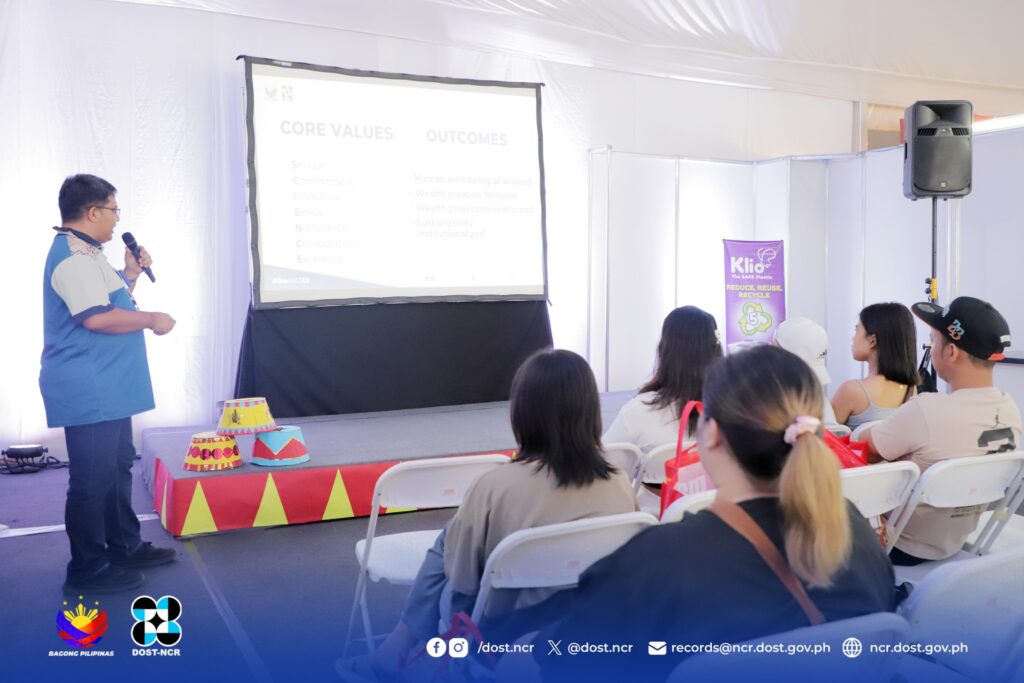
On June 12, 2024, during the Manila Food and Beverage Expo (MAFBEX) Talks at the World Trade Center in Pasay City, Dr. Peña discussed DOST–NCR’s science, technology, and innovation-based programs and services for the food sector. He highlighted initiatives such as food safety consultancy, plant layout design, packaging and labeling assistance, and technical training—part of the agency’s continuing commitment to support food manufacturing businesses and promote innovation-driven solutions in the region.
Likewise, during PROPAK Philippines 2025 last February, he shared his insights on opportunities and challenges in the packaging industry, emphasizing how innovation plays a critical role in driving competitiveness.
<!-- wp:image {"id":8095,"sizeSlug":"large","linkDestination":"none"} -->
<figure class="wp-block-image size-large"><img src="https://foodmicrobiology.academy/wp-content/uploads/FST-1024x576.png" alt="" class="wp-image-8095"/></figure>
<!-- /wp:image -->
DOST-NCR Spearheads Food Safety Training for Health Facilities . [Photograph]. DOST NCR. https://ncr.dost.gov.ph/dost-ncr-spearheads-food-safety-training-for-health-facilities/
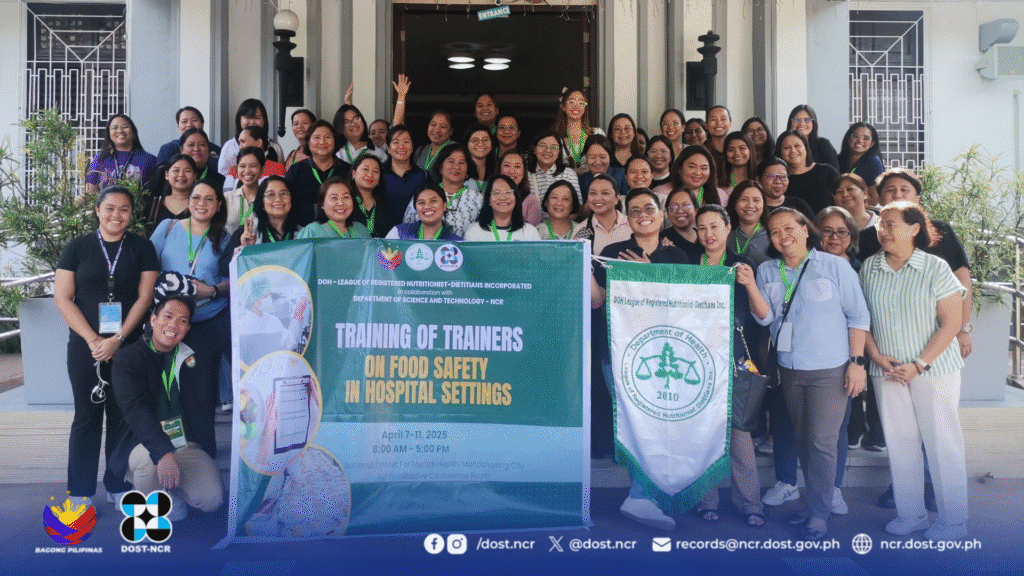
As part of DOST-NCR, Dr. Peña also served as a resource speaker in the Food Safety Training for Health Facilities. He introduced tools and strategies to improve operational efficiency and ensure food safety, supported by training modules distributed to participants. The five-day training not only imparted technical knowledge but also strengthened participants’ confidence to lead food safety initiatives in their respective workplaces.
Recently, he earned his Doctor of Philosophy in Food Science from UPLB, showing his dedication to learning more and using his knowledge to help improve food safety and innovation in the sector.
Dr. Peña’s journey is like a comma—a pause that signifies there is always more to come. Each accomplishment marks not an ending, but a continuation of meaningful contributions to science and education. This is evident in his role as a key partner in Safe Plate PH, where his insights and expertise continue to inspire the advancement of science communication and food safety advocacy. His story reminds us that every stage of his journey leads to greater impact, showing that in science, a comma means more and more. Indeed, he is like a comma that leads to more.
Colon: Opening the Conversation on Food Safety
Safe Plate PH welcomed Dr. Peña as a guest speaker in a youth-led workshop on food safety. With his expertise in food science, he delivered a talk titled “The Role of Microorganisms in Food Safety,” providing participants with an understanding of how microorganisms influence the food we eat and eventually causes foodborne diseases.
Dr. Peña began by classifying microorganisms as good and bad. On one hand, they bring immense benefits in the form of probiotics, fermented products, flavor development, and food preservation. On the other, they pose significant risks as the primary agents behind foodborne diseases. Probiotics and fermentation, for example, are natural processes that humans have used for centuries to enhance both nutrition and shelf life. Yet, without careful control, harmful microorganisms can thrive and compromise food safety. He explained that food safety is a major focus in food microbiology.
<!-- wp:image {"id":8097,"sizeSlug":"full","linkDestination":"none"} -->
<figure class="wp-block-image size-full"><img src="https://foodmicrobiology.academy/wp-content/uploads/farm-to-forkz.png" alt="" class="wp-image-8097"/></figure>
<!-- /wp:image -->
Codex Alimentarius. [Photograph]. Food and Agricultural Organization. https://www.fao.org/fao-who-codexalimentarius/news-and-events/news-details/de/c/1294984/
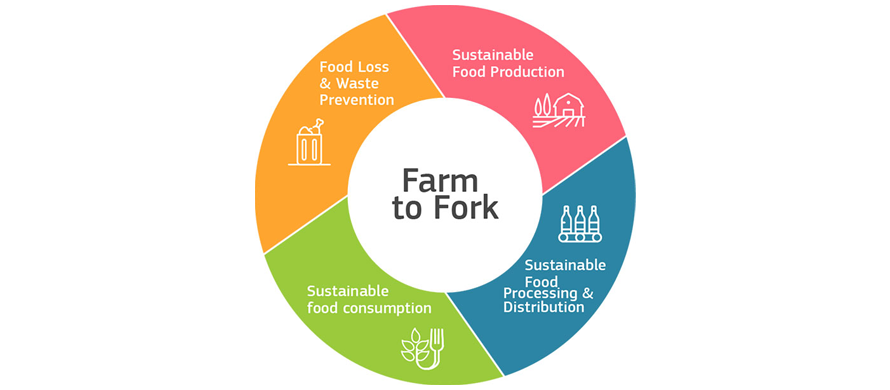
The concept of food safety hazards was introduced and identified three major categories namely, chemical, biological, and physical. These hazards can emerge anywhere along the farm-to-fork route, beginning from soil and water and extending to human handling, equipment use, and storage practices. He noted that many outbreaks of foodborne diseases have been traced back to multiple implicated dishes, showing how lapses in food safety culture—even in communities with generally good practices—can still lead to risks.
Building on this, he further explained the sources of microbial contamination, such as soil, water, air, vegetation, fungi, and the gastrointestinal tract. Even human faces and hands can serve as vehicles of contamination if proper hygiene is not observed. For this reason, he emphasized the importance of effective sanitation procedures. “After you clean, you must sanitize,” he said, highlighting that sanitizing ensures higher log reduction of microbial load and greater food safety.
Dr. Peña also introduced participants to the factors influencing microbial growth. Intrinsic factors include food composition, water activity, and pH. He explained that water activity (Aw) below 0.6 prevents microbial growth, while most bacteria thrive at neutral to slightly alkaline pH. Extrinsic factors include temperature and humidity, with high humidity creating a breeding ground for bacteria and fungi. He reminded the audience of the “danger zone” between 40°F and 140°F, where bacteria grow most rapidly. This is why proper cooking, reheating at 165°F, and cold storage are essential. Simple techniques such as salting, drying, or vacuum packaging can further restrict microbial growth.
Peña, C (2025). Role of Microorganisms in Food Safety [Photograph]. DOST NCR. Screenshot from the Online Workshop. https://www.youtube.com/watch?v=ddR-2aQRZPs&t=5135s
Importantly, Dr. Peña connected his discussion to the legal framework in the Philippines, citing the Food Safety Act of 2013 (RA 10611) and FDA Circular No. 2022-012. He stressed that food handlers affect public health. As such, compliance with national regulations is a must to ensure that both businesses and communities remain accountable to high standards of safety.
Just like a colon that signals what comes next, Dr. Peña’s talk opened a conversation on understanding the risks that microorganisms bring—how they can contaminate food from soil, water, air, and human handling; how they multiply quickly in unsafe conditions; and how they lead to foodborne infections that endanger public health.
Exclamation Point: A Call to Action for Safer Practices
Beyond technical content, one of the important key takeaways that participants could apply in their daily lives was the practical knowledge of how to control microbial growth in food and food processing. Here, we can observe that while advanced laboratory techniques are crucial in detecting and identifying microorganisms, prevention begins with everyday practices that anyone can do at home, in school, or in the workplace.
<!-- wp:image {"id":8099,"sizeSlug":"full","linkDestination":"none"} -->
<figure class="wp-block-image size-full"><img src="https://foodmicrobiology.academy/wp-content/uploads/5-keys.jpg" alt="" class="wp-image-8099"/></figure>
<!-- /wp:image -->
5 Food Safety Practices You Need to Know. [Photograph]. Changhua County Public Health Bureau. https://www.chshb.gov.tw/en/node/569#gsc.tab=0
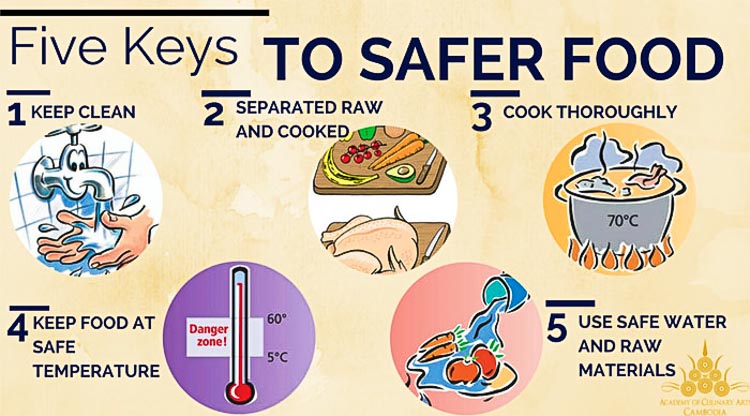
He outlined the five golden rules of food safety: keep clean, separate raw and cooked foods, cook thoroughly, keep food at safe temperatures, and use safe water and raw materials. Each step, though simple, serves as a barrier against contamination and helps prevent microorganisms from multiplying to dangerous levels.
Moreover, Dr. Peña also highlighted the importance of broader measures such as sanitation procedures, good manufacturing practices, and strict employee hygiene in food establishments. These reinforce the principle that food safety is not just a matter of science but also of discipline and responsibility. Even the most basic act of proper handwashing remains one of the most effective and accessible defenses against contamination. Taken together, these practices may seem ordinary, but when consistently applied, they form the foundation of a strong food safety culture that protects both individual households and entire communities.
Being a guest speaker for Safe Plate Philippines showcased the importance of the input of experts who can bring credibility and bridge the gap between research and practice, between fake news and facts. His lecture aligned perfectly with FMA’s project of Safe Plate PH in building awareness and further strengthening the culture of food safety in the Philippines. By including young participants and advocates in the conversation, we are creating a generation of advocates ready to take action for safer, healthier, and more sustainable food systems.
Quoting from an article by Mellor (2024), “It is time that all members of the food community from public health and policy makes, through the industry, nutritionists and food science and technology should come together.” The said statement highlights the importance of multi-sector collaboration to ensure food safety, sustainability, and innovation. After all, science and technology improve and work towards reducing foodborne diseases and addressing nutrition-related concerns by developing safer food processes, fortifying products with essential nutrients, and introducing sustainable production methods. These innovations not only protect consumers but also strengthen public trust in the food and health system.
Just like an exclamation point, we are called to action in bringing awareness and applying these learnings to our daily lives. Above all, these lessons must not remain confined within the four corners of the classroom or the laptop screen, but should extend beyond—by serving the public who truly needs this knowledge and these practices. In the context of food safety and science, this means practicing proper hygiene, supporting sustainable innovations, and promoting community education on nutrition and safe food handling. By doing so, information becomes meaningful contributions that improve the quality of life for all.
<!-- wp:image {"id":8100,"sizeSlug":"large","linkDestination":"none"} -->
<figure class="wp-block-image size-large"><img src="https://foodmicrobiology.academy/wp-content/uploads/dooosososo-1024x858.jpg" alt="" class="wp-image-8100"/></figure>
<!-- /wp:image -->
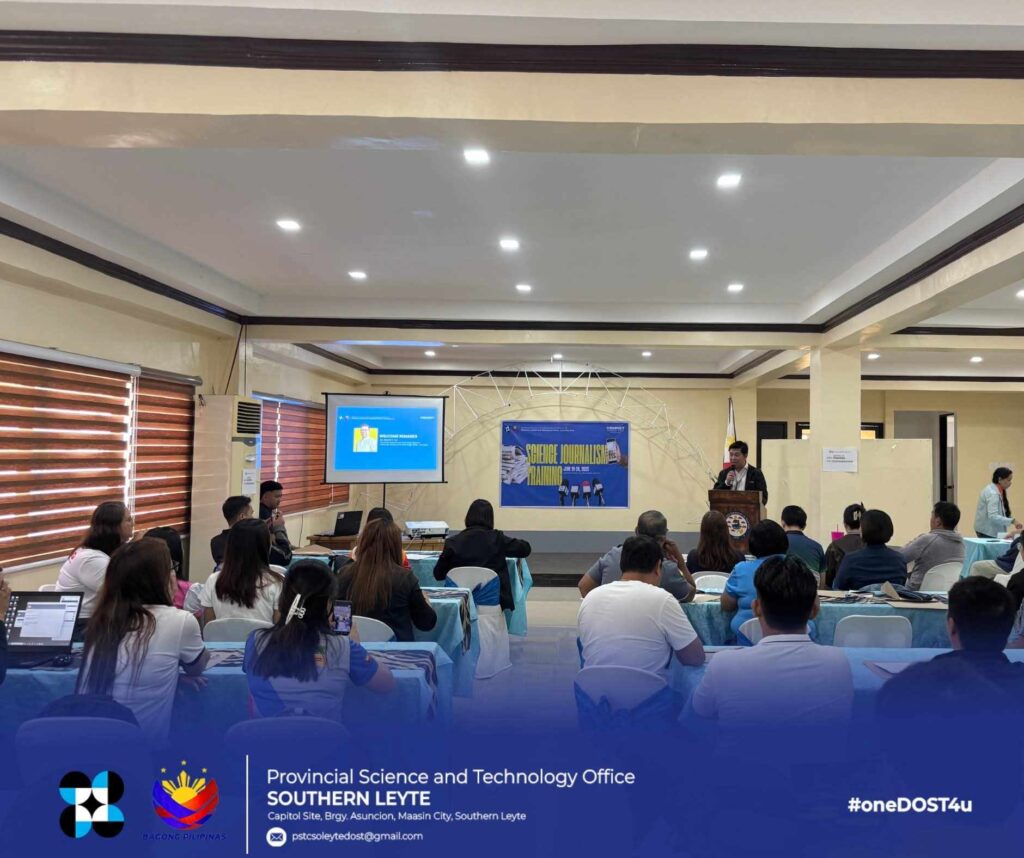
Pedalino, M. (2025). DOST trains communicators on science-based story telling. [Photograph]. Philippine Information Agency. https://pia.gov.ph/dost-trains-communicators-on-science-based-story-telling/
These punctuation marks remind us that science and technology in the food sector is not just a technical one. More importantly, its education and communication must be like storytelling to really captivate the minds and hearts of the public. By framing food science concepts through relatable narratives, metaphors, and practical examples, we make them more understandable and engaging for everyday people. This approach bridges the gap between complex scientific knowledge and daily practices, making individuals active participants in ensuring food safety and sustainability.
Like the comma, science and technology remind us that there is always more to discover and improve. Like the colon, they signal what comes next, inviting us to anticipate solutions, innovations, and opportunities that lie ahead. And like the exclamation point, they call us to action—to apply what we have learned, to share it with others, and to transform knowledge into meaningful change.